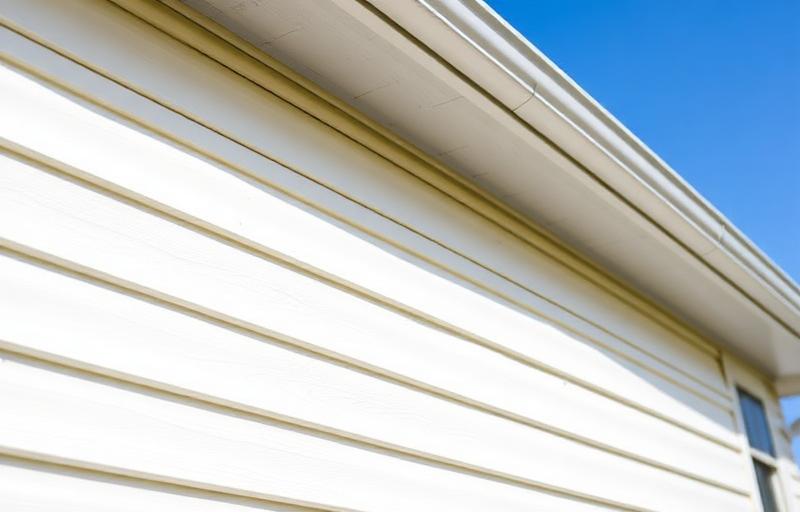
Why Vinyl Remains the Top Choice
Vinyl accounts for roughly one-third of all residential siding installed each year. It requires almost no maintenance beyond occasional cleaning, comes in realistic wood-grain textures, and lasts 20 to 40 years depending on quality. For homeowners who want a reliable, affordable exterior, vinyl is the starting point.
Understanding Vinyl Grades
Builder grade vinyl (0.040 inch thickness) is the cheapest but dents easily and fades faster. Mid-grade (0.042 to 0.044 inch) is the sweet spot for most homes. Premium grade (0.046 to 0.050 inch) offers the best wind resistance, UV protection, and realistic wood texture. The thickness difference meaningfully affects durability and appearance.
Insulated vs Standard Vinyl
Insulated vinyl siding has a foam backing that adds R-value to your walls, reduces noise transmission, and makes the panels more rigid and impact-resistant. It costs more than standard vinyl but can noticeably reduce heating and cooling bills, especially in extreme climates.
How Home Size Affects Your Project
Small homes (under 1,200 sq ft) have the simplest and most affordable projects. Average homes (1,200 to 2,500 sq ft) represent the most common range. Large homes (over 2,500 sq ft) with multiple stories and complex rooflines require significantly more labor and materials.
Climate Considerations for Vinyl
Vinyl performs best in mild to moderate climates. In extreme cold, thin vinyl can become brittle and crack on impact. In extreme heat, dark-colored vinyl can warp. Premium grades with UV stabilizers and thicker profiles handle both extremes better. For the harshest climates, consider insulated vinyl or upgrading to fiber cement.